 Chat with us

Call us now :07313725902
 Send Inquiry
 Send Inquiry
Tundish for Continuous Casting Machine
Price 600000 INR/ Set
MOQ : 1 Set
Tundish for Continuous Casting Machine Specification
- Installation Guideline
- Foundation required, proper refractory installation mandatory
- Motor Power
- 5 - 10 HP
- Model No
- TUN-CCM-STL
- Frequency
- 50 Hz
- Production Capacity
- 2 - 8 Tundishes per Day
- Accessories
- Lifting Hooks, Discharge Nozzle, Tundish Cover
- Temperature Range
- 1200°C - 1600°C
- Efficiency (%)
- >85
- Automation Grade
- Manual / Semi-Automatic
- Driven Type
- Mechanical / Hydraulic
- Usage & Applications
- Intermediate receptacle for molten steel between ladle and mould in CCM
- Type
- Tundish for Continuous Casting Machine
- Material
- High Alumina Refractory / Castable Steel Shell
- Computerized
- No
- Drive Type
- Mechanical
- Voltage
- 380V - 415V
- Power
- 5-20 kW (Depending on Model)
- Weight (kg)
- 3500 - 6000 Kg
- Dimension (L*W*H)
- Customizable as per Requirement
- Color
- Industrial Blue / Grey
- Capacity
- 3 - 10 Tons
- Features
- High refractory lining, thermal insulation, slag retention, uniform metal flow, easy maintenance
- Power Consumption
- Variable as per process
- Machine Type
- Continuous Casting Machinery Accessory
- Service Life
- 8 - 15 Heats (Depending on Operation)
- Maintenance Requirement
- Periodic Lining Check and Replacement
- Steel Grade Compatibility
- All Types (Mild, Alloy, Stainless)
- Shell Thickness
- 12 mm - 25 mm
- Thermal Conductivity
- Low (High Insulating Refractories)
- Groove Configuration
- Single/Multi Grooved
- Heat Retention Time
- 20 - 35 min
- Pre-heating Method
- Burner System
- Operating Pressure
- Atmospheric
- Heat Loss Reduction
- Enhanced by High Alumina Material
- Slag Retention Feature
- Yes
- Refractory Lining Thickness
- 60 mm - 150 mm
- Casting Nozzle Type
- Interchangeable
Tundish for Continuous Casting Machine Trade Information
- Minimum Order Quantity
- 1 Set
- Supply Ability
- 1 Set Per Month
- Delivery Time
- 1 Week
About Tundish for Continuous Casting Machine
Technology for clean steel production.
Tundish is a medium for pouring molten metal into a mold, having holes in the bottom to prevent splashing.
All plates will be ultra sonically tested.
All weld joints will be tested for dye penetration test & magnetic particle test.
Stress relieving will be done for all welded joints
The Trunion ring material will be as per specification.
The tundish will be sent with heat resistant aluminium paint.
Welding: all welds of ladle shell and bottom are full penetration welds with backgauged roots. All welds of the charging ladle are 100 % magnaflux-tested (mt). In addition all full penetration welds are 100 % ultrasonic-tested (ut). X- ray testing has to be done on welds marked.
- Pay Mode Terms: L/C (Letter of Credit), T/T (Bank Transfer)
- F. O. B. Price Order: 6000 USD
- Minimum Order Quantity: 1 Piece
- Port of Dispatch: J.N.P.T
- Production Capacity: 100
- Delivery Time: 15 DAYS
- Packaging Details: AS PER STANDARD
Advanced Refractory Lining for Enhanced Performance
Our tundish utilizes high alumina refractory linings ranging from 60 mm to 150 mm, ensuring low thermal conductivity and superior insulation. This feature not only minimizes heat loss but also supports a service life of 8 to 15 heats, depending on operational intensity and maintenance frequency. The quality of refractory materials directly correlates with reliable steel casting and energy efficiency.
Versatile and Customizable Design
Engineered with flexibility in mind, the tundish offers customizable dimensions, capacities from 3 to 10 tons, and compatibility with all steel grades. It is suitable for both manual and semi-automatic operations, with control options ranging from mechanical to PLC-based systems. Interchangeable casting nozzles and single or multi-grooved configurations add to its adaptability in diverse casting environments.
Simplified Maintenance & Efficient Operation
Routine maintenance is made straightforward by easy access to refractory linings and components. Periodic checks and lining replacements ensure consistent performance and maximize lifespan. The burner-based pre-heating system prepares the tundish quickly, reducing downtime and improving the heat retention time to 2035 minutes, enhancing overall operational efficiency.
FAQs of Tundish for Continuous Casting Machine:
Q: How does the high alumina refractory lining benefit the tundishs operation?
A: The high alumina refractory lining provides excellent thermal insulation, resulting in reduced heat loss during casting. This extends the tundishs service life (815 heats), maintains a stable temperature for molten steel, prevents premature solidification, and supports energy-efficient operation.Q: What is the recommended process for pre-heating the tundish before use?
A: Pre-heating should be conducted using the integrated burner system, gradually bringing the refractory lining to the desired temperature range of 1200C to 1600C. This process ensures even heating, prolongs lining life, and prevents thermal shock during initial contact with molten steel.Q: When and how should the refractory lining be maintained or replaced?
A: The refractory lining should be inspected after each casting operation or heat cycle. Replace or repair the lining when excessive wear, cracks, or material loss is detected to ensure optimal insulation and safe operation. Regular maintenance maximizes the tundishs efficiency and service lifespan.Q: Where can the tundish be installed, and are there specific installation requirements?
A: This tundish is designed for installation in continuous casting machine setups of steel plants. Proper foundation and mandatory refractory lining installation are required for safe, stable operation. Customizable dimensions ensure compatibility with various production lines and site requirements.Q: What steel grades is the tundish compatible with?
A: Our tundish is suitable for all steel grades including mild, alloy, and stainless steels, offering versatility for a wide range of metallurgical applications.Q: How does the design help with slag retention and uniform molten steel flow?
A: The tundish features advanced slag retention capability and options for single or multi-grooved configurations. These design elements facilitate effective separation of slag from molten steel and promote a steady, uniform flow to the casting mould, ensuring high-quality steel output.Q: What are the primary benefits of using this tundish in a continuous casting process?
A: Key benefits include enhanced thermal insulation, reduced heat losses, easy maintenance, compatibility with all steel types, customizable sizes, improved metallurgical quality, and operational flexibility with both manual and PLC-based control systems.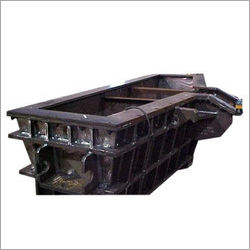
Tell us about your requirement

Price:
Quantity
Select Unit
- 50
- 100
- 200
- 250
- 500
- 1000+
Additional detail
Mobile number
Email

More Products in Continuous Casting Machine Category
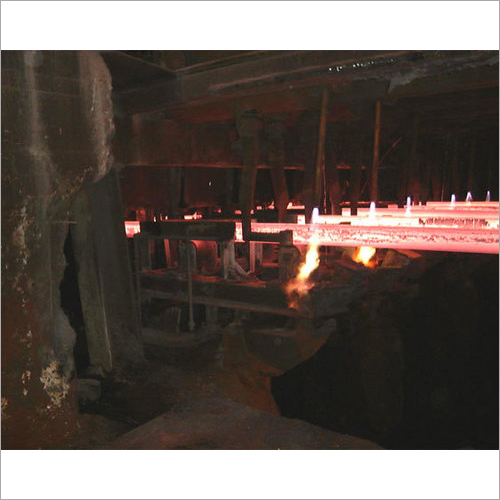
Continuous Casting Machine
Price 2100000 INR / Set
Minimum Order Quantity : 1 Set
Usage & Applications : For continuous casting of steel billets and blooms
Color : Metallic Grey
Power : 75 kW
Voltage : 380 V
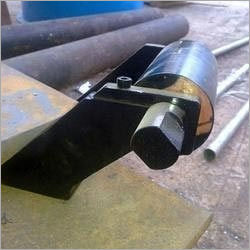
Foot Roller for Continuous Casting Machine
Price 1200000 INR / Set
Minimum Order Quantity : 1 Set
Usage & Applications : Metallurgical Industry, Steel Plant Continuous Casting
Color : Metallic Grey
Power : 25 kW
Voltage : 220V / 380V
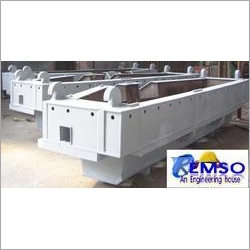
Tundish Spraying Machine
Price 500000 INR / Set
Minimum Order Quantity : 1 Set
Usage & Applications : For spraying refractory materials inside steel tundishes
Color : Industrial Grey
Power : 5 kW
Voltage : 415V
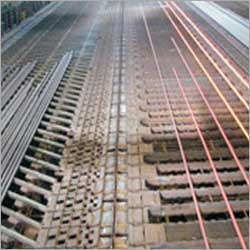
Automatic Rack Type Cooling Bed for CCM
Price 15000000 INR / Set
Minimum Order Quantity : 1 Set
Usage & Applications : Used for cooling and straightening of hot rolled bars and billets in steel plants
Color : Industrial Blue & Grey
Power : 1535 kW
Voltage : 380440 V

 Send Inquiry
Our Products
- Hydraulic Pusher Manipulator for Furnace
- Ladle Transfer Car
- Hot Metal Transferring Equipment
- Billet / Bloom Grinding Machine
- Steel Melt Shop Equipment
- Ladle Refining Furnace
- Continuous Casting Machine
- Vacuum Degasser
- Oxygen Decarburization Vessel
- Argon Oxygen Decarburization Converter
- Vacuum Oxygen Refining Furnace
- Scrap Management
- Tundish Drying and Preheating System
- Wire Feeding Machine
- Automatic Temperature Sampling Manipulator
- Ladle Drying Station
- Electric Arc Furnace
- Tundish Drying Station
- Tundish Tilter Turnover Device
- Slab Turnover Tilting Device
- Cored Wire
- Foundry Ladle
- Rotary Kiln
- Gas Based DRI Plant
- Scrap Baling Machine
- Immersion Sensor
- Continuous casting Machine Equipments
- Slag Raking Machine
- Ladle Drying And Preheating Station
- Materials Handling Equipment
- Scrap Management And Optimisation Solutions
- Hot Metal Ladle for Steel Plant

B No. D-157, Road No. 24, Site -5, Greater Noida Export Promotion Industrial Park,Greater Noida - 201310, Uttar Pradesh, India

Mr Madan Kumar
(Director)
Mobile :07313725902
 Send Inquiry
 Send SMS
Developed and Managed by Infocom Network Private Limited.
