 Chat with us
Call us now :07313725902
 Send Inquiry
 Send Inquiry
Tundish for Steel Plant
Price 1200000 INR/ Set
MOQ : 1 Set
Tundish for Steel Plant Specification
- Features
- Robust Design; Uniform Distribution of Steel
- Equipment Type
- Steel Plant Tundish
- Condition
- New
- Lifting Capacity
- Custom as per Ladle Size and Steel Plant Requirement
- Max. Lifting Load
- Based on Steel Quantity (typically 550 tons)
- Max. Lifting Height
- Based on Application
- Feature
- Longer working life; Durable structure
- Attributes
- High Temperature Resistance; Good Insulation
- Material
- High Strength Castable Refractory or Precast Lining
- Surface Treatment
- Anti-Oxidation/Customization Possible
- Shape
- Rectangular/Polygonal/Open Top Variation
- Application
- Continuous Casting of Liquid Steel
- Inner Lining
- Insulating Refractory with High Alumina Content
- Steel Grade Compatibility
- All grades, alloy and non-alloy
- Manufacturing Method
- IS Standard; Custom Manufacturing Possible
- Temperature Endurance
- Up to 1700C
- Capacity Range
- 550 Tons (customizable)
- Installation
- On Continuous Casting Platform
Tundish for Steel Plant Trade Information
- Minimum Order Quantity
- 1 Set
- Supply Ability
- 2 Sets Per Month
- Delivery Time
- 1 Months
About Tundish for Steel Plant
Technology for clean steel production.Tundish is a medium for pouring molten metal into a mold, having holes in the bottom to prevent splashing.
All plates will be ultra sonically tested.
All weld joints will be tested for dye penetration test & magnetic particle test.
Stress relieving will be done for all welded joints
The Trunion ring material will be as per specification.
The tundish will be sent with heat resistant aluminium paint.
Welding: all welds of ladle shell and bottom are full penetration welds with backgauged roots. All welds of the charging ladle are 100 % magnaflux-tested (mt). In addition all full penetration welds are 100 % ultrasonic-tested (ut). X- ray testing has to be done on welds marked.
Product details
| Orientation | Horizontal |
| Brand | Remso |
| Usage/Application | Industrial |
| Material | Steel |
| Country of Origin | Made in India |
| Lifting Height(m) | 10-15 m |
High Strength and Premium Build
Our tundish is crafted from top-quality castable refractory and precast lining to provide maximum structural strength and longevity. The high alumina insulating inner lining ensures excellent thermal efficiency, even in demanding steel plant environments. Custom manufacturing options are available to match specific needs and standards.
Customizable Capacity and Design
Available in a range of shapesincluding rectangular, polygonal, and open topour tundish can be customized for capacities from 5 to 50 tons. Surface treatments like anti-oxidation coatings and lifting capacity modifications ensure seamless integration into existing continuous casting setups.
Reliable Performance for Continuous Casting
Capable of withstanding temperatures up to 1700C, this tundish efficiently manages the distribution of liquid steel during the continuous casting process. Its robust construction and effective insulation contribute to uniform steel flow, extended service life, and reduced maintenance needs.
FAQs of Tundish for Steel Plant:
Q: How is the tundish for steel plants installed?
A: The tundish is installed on the continuous casting platform of the steel plant. Special attention is given to proper alignment and support to ensure safe and reliable operation during the casting process.Q: What benefits does a high alumina inner lining provide?
A: A high alumina inner lining offers excellent insulation, superior temperature resistance, and enhanced durability, which extends the working life of the tundish and maintains steel purity during casting.Q: When should the tundish lining be replaced or maintained?
A: The tundish lining should be inspected after every casting cycle, and maintenance or replacement is recommended whenever significant wear, cracks, or erosion are observed to guarantee consistent casting quality and safety.Q: What customization options are available for the tundish?
A: Capacity, shape, lifting capacity, and surface treatments such as anti-oxidation coatings can all be tailored according to the steel plants specific requirements. Custom manufacturing as per IS standards is available to meet unique operational needs.Q: Where can this tundish be used in steel production?
A: This tundish is designed for use in continuous casting areas of steel plants, handling all grades of liquid steelboth alloy and non-alloyas part of the production process.Q: What is the manufacturing process of this tundish?
A: The tundish is manufactured using high strength castable refractory or precast lining materials, adhering to IS standards. It undergoes precise shaping, high-temperature curing, and, if required, surface treatments before being delivered as ready-to-install equipment.Q: What is the main advantage of using this tundish for continuous casting?
A: The main advantage is its uniform steel distribution, robust and durable construction, and high temperature endurance, all of which help improve product quality and process efficiency while minimizing downtime in steel production.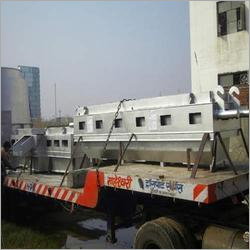
Tell us about your requirement

Price:
Quantity
Select Unit
- 50
- 100
- 200
- 250
- 500
- 1000+
Additional detail
Mobile number
Email

More Products in Ladle Transfer Car Category
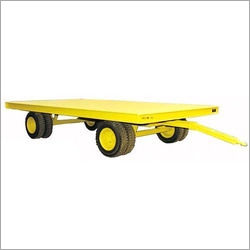
Transfer Carts Trolley
Price 1000000 INR / Set
Minimum Order Quantity : 1 Set
Condition : New
Attributes : Other, Heavy Duty, High Durability
Power Source : Electric
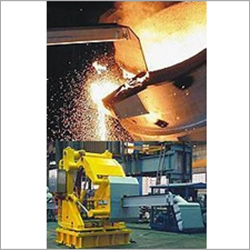
Hot Metal Ladle Slag Raking Machine
Price 5500000 INR / Set
Minimum Order Quantity : 1 Set
Condition : New
Attributes : Easy To Operate
Warranty : 1 year
Power Source : Electric
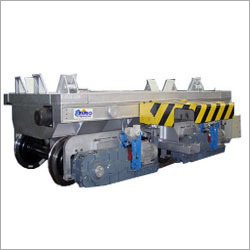
Heavy Load Carrying Ladle Transfer Car
Price 1600000 INR / Unit
Minimum Order Quantity : 1 Unit
Condition : New
Attributes : Other
Warranty : Yes
Ladle Car
Price 2500000 INR / Set
Minimum Order Quantity : 1 Set
Condition : New
Attributes : Other, Strong Durable Easy To Operate Rust Proof
Warranty : Yes

 Send Inquiry
Our Products
- Hydraulic Pusher Manipulator for Furnace
- Ladle Transfer Car
- Hot Metal Transferring Equipment
- Billet / Bloom Grinding Machine
- Steel Melt Shop Equipment
- Ladle Refining Furnace
- Continuous Casting Machine
- Vacuum Degasser
- Oxygen Decarburization Vessel
- Argon Oxygen Decarburization Converter
- Vacuum Oxygen Refining Furnace
- Scrap Management
- Tundish Drying and Preheating System
- Wire Feeding Machine
- Automatic Temperature Sampling Manipulator
- Ladle Drying Station
- Electric Arc Furnace
- Tundish Drying Station
- Tundish Tilter Turnover Device
- Slab Turnover Tilting Device
- Cored Wire
- Foundry Ladle
- Rotary Kiln
- Gas Based DRI Plant
- Scrap Baling Machine
- Immersion Sensor
- Continuous casting Machine Equipments
- Slag Raking Machine
- Ladle Drying And Preheating Station
- Materials Handling Equipment
- Scrap Management And Optimisation Solutions
- Hot Metal Ladle for Steel Plant


B No. D-157, Road No. 24, Site -5, Greater Noida Export Promotion Industrial Park,Greater Noida - 201310, Uttar Pradesh, India

Mr Madan Kumar
(Director)
Mobile :07313725902
 Send Inquiry
 Send SMS
Developed and Managed by Infocom Network Private Limited.
