 Chat with us
Call us now :07313725902
 Send Inquiry
 Send Inquiry
carbon injector
Price 1800000 INR/ Set
MOQ : 1 Set
carbon injector Specification
- Torque
- Customizable
- Phase
- 3 Phase
- Shape
- Rectangular
- Product Type
- Carbon Injector
- General Use
- Industrial Carbon Injection
- Material
- Mild Steel / Stainless Steel
- Type
- Automatic Carbon Addition System
- Capacity
- 50-200 kg/hr
- Weight (kg)
- Approx. 550 kg
- Computerized
- Yes
- Automatic
- Yes
- Touch Screen
- Optional
- Control System
- PLC Based
- Surface Treatment
- Paint Coated
- QC System
- ISO 9001 Certified
- Tolerance
- 0.1 mm
- Drawing
- Available on Request
- Voltage
- 415 V
- Dimension (L*W*H)
- 1700 x 900 x 1600 mm
- Feature
- High Efficiency, Precise Control, Low Maintenance
- Color
- Blue / Customizable
- Hopper Capacity
- 70 Liters
- Feeding Accuracy
- 1%
- Power Consumption
- 2.5 kW
- Mounting Type
- Floor Mounted
- Operating Temperature
- Up to 70C
- Discharge Method
- Pneumatic
- Feeder Type
- Screw Feeder
- Application
- Steel Plants, Foundries, Metallurgical Industries
- Injection Pressure
- 0.3 0.6 MPa
carbon injector Trade Information
- Minimum Order Quantity
- 1 Set
- FOB Port
- Ex works
- Payment Terms
- Letter of Credit (L/C), Letter of Credit at Sight (Sight L/C), Cash in Advance (CID), Cash Advance (CA)
- Supply Ability
- 12 Sets Per Year
- Delivery Time
- 1 Months
- Main Export Market(s)
- Western Europe, Australia, Eastern Europe, Middle East, Central America, South America, Asia, North America, Africa
- Main Domestic Market
- All India
About carbon injector
In the EAF process, carbon, in the form of coke or coal, is injected into molten slag in the scrap melting. This carbon reacts with iron oxide in the slag, forming gas, which causes slag foaming.
Product details
| Melting Material | Carbon |
| Material Loading Capacity | 500-1500 kg |
| Max Temperature (degree Celsius) | 500-1000 |
High-Precision Industrial Carbon Injection
Achieve reliable carbon delivery with feeding accuracy as fine as 1%. Our injector utilizes a computer-controlled screw feeder system, ensuring exact dosing and precise control in metallurgical applications. Suitable for demanding industrial environments, it guarantees consistent performance and minimal material wastage.
User-Friendly Automation and Control
The PLC-based control system allows automatic and computerized carbon injection, optimizing efficiency and operator convenience. Optional touch screen functionality enhances usability, while robust data and process integration support seamless operations for manufacturing and service environments.
Durable, Versatile, and Low Maintenance Design
Built from mild steel or stainless steel, the unit is engineered for durability and long life. Its paint-coated surface resists corrosion, and its low-maintenance design ensures minimal downtime. Customizable color and torque options, ISO 9001 quality control, and a range of discharge and mounting solutions cater to diverse industrial needs.
FAQ's of carbon injector:
Q: How does the carbon injector maintain precise feeding accuracy during operation?
A: The carbon injector utilizes a PLC-controlled screw feeder system, designed to deliver carbon with a feeding accuracy of 1%. This automation ensures consistent dosing, while real-time monitoring and precise control mechanisms reduce errors and enhance process reliability.Q: What is the process for installing and operating the automatic carbon injector in steel plants or foundries?
A: Installation involves floor mounting the device using the provided drawing and guidelines. After securing the hopper and connecting the pneumatic discharge method, operators can configure parameters via the PLC system or optional touch screen, initiating automatic and computerized operation suitable for steel, foundry, or metallurgical processes.Q: When is pneumatic discharge preferred for carbon injection applications?
A: Pneumatic discharge is optimal when rapid, controlled, and dust-minimized carbon transfer is required. It supports efficient injection under operating pressures of 0.3-0.6 MPa, making it ideal for continuous-production environments like steel plants and metallurgical industries.Q: Where can the carbon injector be applied, and which industries benefit the most from its features?
A: The system is designed for industrial use in steel plants, foundries, and various metallurgical industries. Its precision, high efficiency, and automated controls bring notable advantages to manufacturers, service providers, and exporters seeking improved process stability and quality control.Q: What are the main benefits of using a computerized carbon injection system with optional touch screen?
A: Key benefits include automated precision control, reduced labor intervention, customizable operation via touch screens, real-time data feedback, and increased process consistency. These features help streamline operations, improve end-product quality, and lower total maintenance requirements.Q: How does the high efficiency and low maintenance design add value to industrial operations?
A: High efficiency reduces energy and material consumption, while the low maintenance attributes-thanks to durable paint-coated construction and quality engineering-minimize downtime and operating costs. This combination delivers long-term reliability and optimized productivity for industrial users.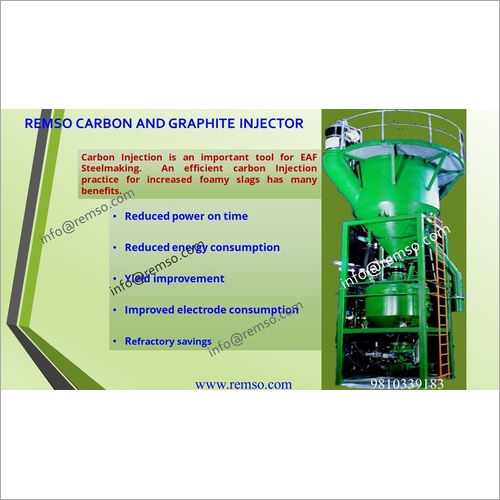
Tell us about your requirement

Price:
Quantity
Select Unit
- 50
- 100
- 200
- 250
- 500
- 1000+
Additional detail
Mobile number
Email

More Products in Steel Melt Shop Equipment Category
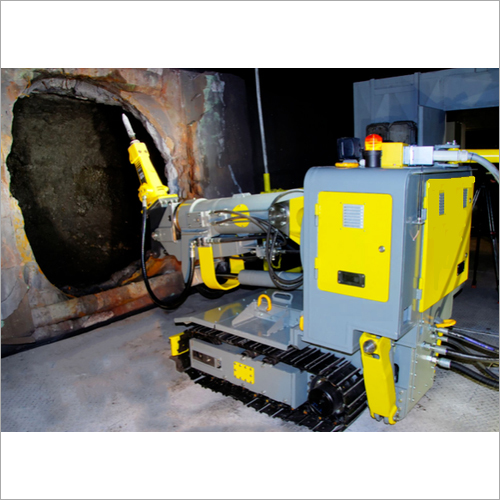
Foundry Slag Destroying Machine
Price 5500000 INR / Set
Minimum Order Quantity : 1 Set
Touch Screen : No
Feature : Other, Rugged construction, Easy mobility, High durability
Surface Treatment : Other, Paint Coated for protection against corrosion
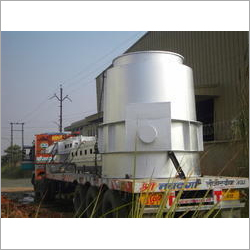
300 Ton Ladles, Steel and Hot Metal Ladle
Price Range 800000.00 - 1400000.00 INR / Piece
Minimum Order Quantity : 1 , , Piece
Touch Screen : No
Feature : Other, High thermal resistance, heavy load bearing, robust welded construction
Surface Treatment : Other, Heatresistant paint / Anticorrosion coating
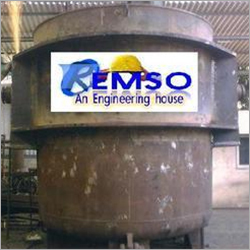
Metal Ladle
Price 1100000 INR / Set
Minimum Order Quantity : 1 Set
Touch Screen : No
Feature : Other, High heat resistance, Sturdy handle, Safe pouring mechanism
Surface Treatment : Other, Galvanized / Painted
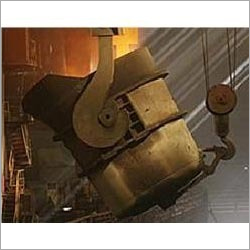
Steel Melt Shop Equipment
Price 1100000 INR / Set
Minimum Order Quantity : 1 , , Piece
Touch Screen : Other, Available
Feature : Other, Heavy duty, robust construction, efficient performance
Surface Treatment : Other, Paint Coated / Galvanized

 Send Inquiry
Our Products
- Hydraulic Pusher Manipulator for Furnace
- Ladle Transfer Car
- Hot Metal Transferring Equipment
- Billet / Bloom Grinding Machine
- Steel Melt Shop Equipment
- Ladle Refining Furnace
- Continuous Casting Machine
- Vacuum Degasser
- Oxygen Decarburization Vessel
- Argon Oxygen Decarburization Converter
- Vacuum Oxygen Refining Furnace
- Scrap Management
- Tundish Drying and Preheating System
- Wire Feeding Machine
- Automatic Temperature Sampling Manipulator
- Ladle Drying Station
- Electric Arc Furnace
- Tundish Drying Station
- Tundish Tilter Turnover Device
- Slab Turnover Tilting Device
- Cored Wire
- Foundry Ladle
- Rotary Kiln
- Gas Based DRI Plant
- Scrap Baling Machine
- Immersion Sensor
- Continuous casting Machine Equipments
- Slag Raking Machine
- Ladle Drying And Preheating Station
- Materials Handling Equipment
- Scrap Management And Optimisation Solutions
- Hot Metal Ladle for Steel Plant


B No. D-157, Road No. 24, Site -5, Greater Noida Export Promotion Industrial Park,Greater Noida - 201310, Uttar Pradesh, India

Mr Madan Kumar
(Director)
Mobile :07313725902
 Send Inquiry
 Send SMS
Developed and Managed by Infocom Network Private Limited.
