 Chat with us
Call us now :07313725902
 Send Inquiry
 Send Inquiry
Ladle for Ladle Refining Furnace
Price 780000 INR/ Set
MOQ : 1 Set
Ladle for Ladle Refining Furnace Specification
- Shape
- Cylindrical with conical or taper bottom
- Torque
- Depends on operating mechanism
- Diameter
- 800 mm 4200 mm (customizable)
- Product Type
- Ladle for Ladle Refining Furnace
- General Use
- Steel melting and refining operations
- Material
- Q235B/16MnR/Carbon Steel with refractory lining
- Type
- Steel Melting Ladle
- Capacity
- 10300 Tons (customizable)
- Weight (kg)
- Depending on capacity, 5,00055,000 kg
- Computerized
- No
- Automatic
- No
- Touch Screen
- No
- Control System
- Manual & Semi-Automatic
- Surface Treatment
- High temperature refractory lining
- QC System
- ISO 9001 Certified, thorough inspection before dispatch
- Tolerance
- 1 mm
- Drawing
- As per customer requirement
- Dimension (L*W*H)
- Customized as per capacity and plant layout
- Feature
- High temperature resistance, robust steel shell, long-lasting refractory lining
- Color
- Grey/Red/Customized
- Tilting Mechanism
- Manual/gear/electro-mechanical drive as required
- Design Standard
- Conforms to leading metallurgical industry standards (GB, DIN, or equivalent)
- Lifting Lugs
- Provided for safe crane handling
- Customization
- Designs and capacities tailored for specific steel plant requirements
- Insulation
- High-efficiency ceramic fiber insulation available
- Trunnion Material
- Forged steel with reliable welding
- Refractory Thickness
- Up to 350 mm (as per steel grade and capacity)
- Accessories
- Slide gate/ladle shroud/argon purging system (optional)
- Shell Thickness
- 2070 mm (based on size/capacity)
- Heat Retention
- Improved for prolonged holding time
- Operating Temperature
- Up to 1700C
- Steel Grade
- Q235B, Q345B, or as per requirement
- Service Life
- Designed for high refractoriness and long-lasting service
- Application
- Used in secondary metallurgy, ladle refining, and alloying processes
- Spout Type
- Fixed/Moveable/Teeming
Ladle for Ladle Refining Furnace Trade Information
- Minimum Order Quantity
- 1 Set
- Supply Ability
- 20 Sets Per Month
- Delivery Time
- 1 Months
About Ladle for Ladle Refining Furnace
Steel ladles of sizes from 10 MT to 300 MT capacity are manufactured from IS: 2002 boiler quality plates as well as IS: 2062 plates.
Design: The Hot metal ladle is of circular design with all welded construction.The material for the ladle shell and bottom shall be
Gr 2 as per IS:2002 (latest revision) or E 250 B as per IS 2062 (2006) or as per the customer specification.
Trunnion: The trunnion and trunnion plates of the ladle is made of forged steel of grade 20 C8 or 30 C8 as per IS:2004 (1991). The trunnion plate is annealed after forging and ultrasonically tested for soundness.
Tilting Mechanism: The ladle is provided with tilting mechanism for tilting.
Welding: All welds of the charging ladle are 100 % magnaflux-tested (MT). In addition all full penetration welds are 100 % ultrasonic.
Robust Construction for Demanding Metallurgical Environments
Manufactured using high-quality Q235B, Q345B, or bespoke materials, these ladles withstand extreme temperatures up to 1700C. The shell and refractory thickness are tailored according to required steel grades and capacities, providing both durability and exceptional thermal insulation. Forged-steel trunnions enhance structural integrity for safe and dependable crane handling during rigorous steel refining operations.
Customizable Design for Diverse Steel Plant Applications
Every ladle is designed to meet specific steel plant layouts and capacity requirements, supporting 10 to 300 tons with a diameter ranging from 800 to 4,200 mm. Options for spout types, tilting mechanisms, and surface treatments create flexibility for a wide array of secondary metallurgy processes, ensuring efficient steel alloying and holding. The robust quality control system, certified to ISO 9001 standards, guarantees reliability and safety.
FAQs of Ladle for Ladle Refining Furnace:
Q: How is the ladle for ladle refining furnace customized for specific steel plant requirements?
A: Each ladle is tailored to match the customers required capacity, steel grade, shape, and dimensional specifications. Customization options include shell and refractory thickness, spout type (fixed, moveable, or teeming), tilting mechanisms, and accessories like slide gates or argon purging systems. Drawings and designs are produced according to the customers plant layout and metallurgical needs.Q: What are the primary advantages of using high-efficiency ceramic fiber insulation in these ladles?
A: The use of ceramic fiber insulation significantly enhances heat retention, helping to maintain molten steel at optimal temperatures for extended periods. This improvement reduces thermal losses during handling and holding, increases energy efficiency, and extends the service life of the refractory lining, ensuring more consistent refining results.Q: When should the refractory lining be replaced in the ladle?
A: Refractory lining replacement intervals depend on the frequency of use, operating temperatures, and the specific steel grades processed. Regular inspections are recommended as part of maintenance, and replacement is required when lining thickness reduces beyond safe limits, or signs of wear, spalling, or cracking compromise operational integrity.Q: Where are these ladles typically utilized within a steel production facility?
A: These ladles are primarily used in secondary metallurgical areas, specifically within ladle refining furnaces, alloying stations, and steel transfer sections. They facilitate the holding, refining, and transfer of molten steel between processes, ensuring clean, precisely alloyed final products.Q: How does the tilting mechanism improve operational safety and efficiency?
A: The manual, gear, or electro-mechanical tilting mechanisms allow for smooth, controlled pouring and teeming of molten steel, reducing the risk of spillage and operator fatigue. Enhanced control over the ladles tilt angle improves process precision during refining and alloying operations.Q: What is the process followed for quality assurance before dispatch of these ladles?
A: A rigorous quality control process, certified by ISO 9001 standards, is strictly followed. Each ladle undergoes thorough inspection for dimensional accuracy (1 mm tolerance), welding integrity, heat-resistant lining quality, and overall structural soundness to ensure safe and reliable operation upon delivery.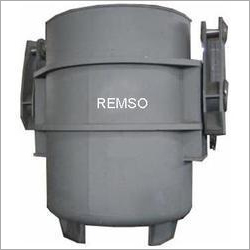
Tell us about your requirement

Price:
Quantity
Select Unit
- 50
- 100
- 200
- 250
- 500
- 1000+
Additional detail
Mobile number
Email

More Products in Steel Melt Shop Equipment Category
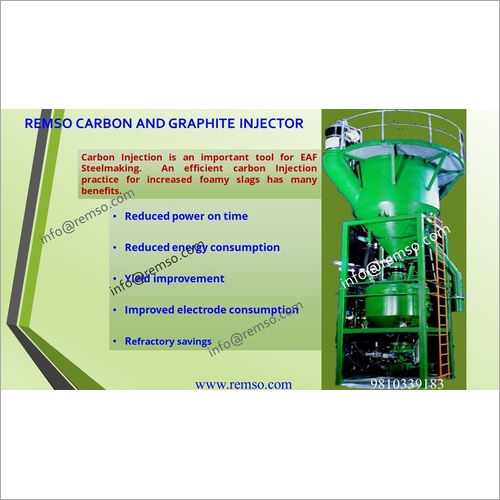
carbon injector
Price 1800000 INR / Set
Minimum Order Quantity : 1 Set
Feature : Other, High Efficiency, Precise Control, Low Maintenance
Material : Other, Mild Steel / Stainless Steel
Automatic : Yes
Weight (kg) : Approx. 550 kg
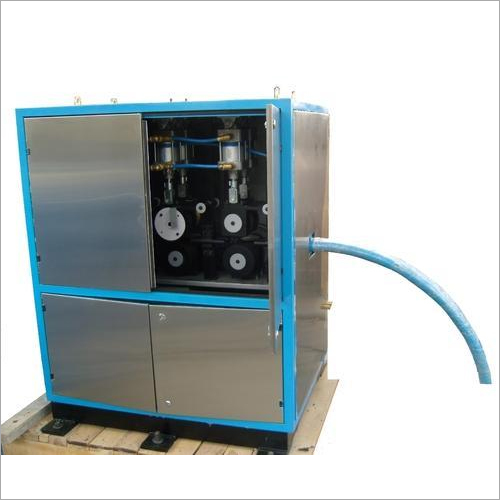
Cored Wire Feeder Machine
Price 1550000 INR / Set
Minimum Order Quantity : 1 Piece
Feature : Other, Twin drive with independent speed control, Heavyduty construction
Material : Other, Mild Steel Structure
Automatic : Yes
Weight (kg) : Approx. 800 kg
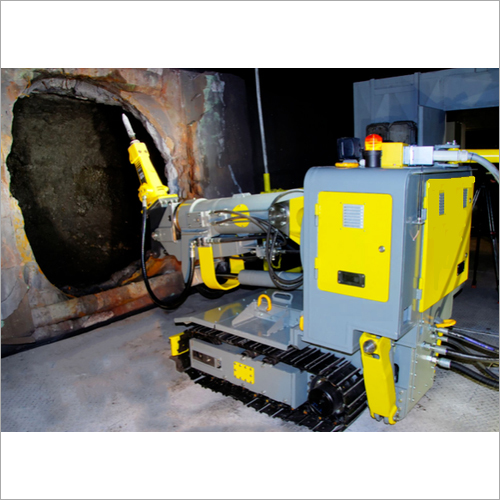
Foundry Slag Destroying Machine
Price 5500000 INR / Set
Minimum Order Quantity : 1 Set
Feature : Other, Rugged construction, Easy mobility, High durability
Material : Other, Mild Steel / Alloy Steel body
Automatic : Other, Semi Automatic
Weight (kg) : 250 400 kg (approx.)
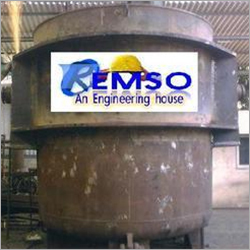
Metal Ladle
Price 1100000 INR / Set
Minimum Order Quantity : 1 Set
Feature : Other, High heat resistance, Sturdy handle, Safe pouring mechanism
Material : Other, Mild Steel / Cast Iron
Automatic : No
Weight (kg) : Approx. 815 kg depending on size

 Send Inquiry
Our Products
- Hydraulic Pusher Manipulator for Furnace
- Ladle Transfer Car
- Hot Metal Transferring Equipment
- Billet / Bloom Grinding Machine
- Steel Melt Shop Equipment
- Ladle Refining Furnace
- Continuous Casting Machine
- Vacuum Degasser
- Oxygen Decarburization Vessel
- Argon Oxygen Decarburization Converter
- Vacuum Oxygen Refining Furnace
- Scrap Management
- Tundish Drying and Preheating System
- Wire Feeding Machine
- Automatic Temperature Sampling Manipulator
- Ladle Drying Station
- Electric Arc Furnace
- Tundish Drying Station
- Tundish Tilter Turnover Device
- Slab Turnover Tilting Device
- Cored Wire
- Foundry Ladle
- Rotary Kiln
- Gas Based DRI Plant
- Scrap Baling Machine
- Immersion Sensor
- Continuous casting Machine Equipments
- Slag Raking Machine
- Ladle Drying And Preheating Station
- Materials Handling Equipment
- Scrap Management And Optimisation Solutions
- Hot Metal Ladle for Steel Plant


B No. D-157, Road No. 24, Site -5, Greater Noida Export Promotion Industrial Park,Greater Noida - 201310, Uttar Pradesh, India

Mr Madan Kumar
(Director)
Mobile :07313725902
 Send Inquiry
 Send SMS
Developed and Managed by Infocom Network Private Limited.
